1) Webinar on Alzforum.org

Updated 22 December 2010

Live Discussion: Focus on the Locus! (Ceruleus, That Is, in Alzheimer’s Disease)


Michael Heneka

Douglas Feinstein

David Weinshenker

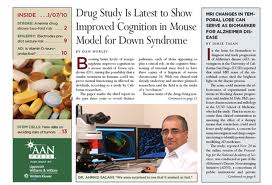
Ahmad Salehi

Murray Raskind

Virgil Muresan

This Webinar recapped the latest research in this area. Michael Heneka of the University of Bonn, Germany, and Doug Feinstein of the University of Illinois, Chicago, gave presentations, and were joined in a panel discussion byVirgil Muresan, New Jersey Medical School, Newark; Murray Raskind, University of Washington, Seattle; Ahmad Salehi, Stanford University School of Medicine, Palo Alto, California; and David Weinshenker, Emory University, Atlanta, Georgia.

With their indispensable role in learning and memory, the hippocampus and cortex have grabbed the lion’s share of attention in Alzheimer’s disease, leaving other brain areas—such as that bluish spot in the brain stem called the locus ceruleus—in relative obscurity. In recent years, though, this hub of noradrenaline-producing neurons has been raising Michael Heneka’s and Douglas Feinstein’s eyebrows, as their data suggest that shortage of this neurotransmitter accelerates AD pathogenesis. In multiple AD mouse strains, damage to the locus ceruleus drives up amyloid pathology and hastens memory loss. Conversely, restoring noradrenaline by way of synthetic precursors can rescue these problems. What causes the locus ceruleus to degenerate in the first place? Does this happen in human AD, too? Might this brain area be a viable target for therapies replenishing noradrenaline and/or noradrenergic cells?

http://www.alzforum.org/res/for/journal/detail.asp?liveID=186


2) Blog on NY Times on whether to treat Down syndrome
January 11, 2010, 1:24 PM

Should Down Syndrome Be Cured?

The guest post here on Friday — about the birth of Cash Van Rowe during a blizzard, and the jolting news that he had Down syndrome — led many of you to leave comments for his parents, assuring them that the road ahead was a journey they would cherish.

But what if Cash’s Down syndrome could be cured — or, more precisely, be mitigated?

News out of Stanford University late last year hinted that this might one day be possible. Researchers from its medical school and the Lucile Packard Children’s Hospital explored why children born with Down syndrome do not start life developmentally delayed but rather fall behind as they get older. By using mice that were genetically engineered to mimic Down syndrome, they found that neural memory deficits prevent such children from collecting learned experiences, and that they could improve memory and cognition by medically boosting norepinephrine signaling in the brain.

The study (which was published in the November issue of the journal Science Translational Medicine) and the accompanying announcement by Stanford hinted at an eventual cure. “If you intervene early enough, you will be able to help kids with Down syndrome to collect and modulate information,” said Ahmad Salehi, a neurologist and the primary author of the study. “Theoretically, that could lead to an improvement in cognitive functions in these kids.”

There are already drugs on the market that boost norepinephrine signaling. They are used to treat depression and A.D.H.D., and Salehi expressed the hope that his findings would soon lead to trials of such drugs on babies with Down syndrome.

Good news, right? Not necessarily. The announcement of a potential breakthrough (which, it should be noted, is still mostly theoretical and well in the future) has led to some soul-searching among parents of children with Down syndrome who wonder how much the presence of an extra chromosome makes their children who they are.......




3) Stanford Daily

New Down syndrome treatment suggested by study in mice

BY ERIN DIGITALE

Jonathan Rabinovitz description of photo

Ahmad Salehi

At birth, children with Down syndrome aren’t 

developmentally 

delayed. But as they age, these kids 

fall behind. Memory deficits inherent in Down 

syndrome hinder learning, making it hard for the brain 

to collect experiences needed for normal cognitive 

development. 

Now, findings from the Stanford 

University School of Medicine and Lucile Packard 

Children’s Hospital shed light on the neural basis of memory defects in Down syndrome and 

suggest a new strategy for treating the defects with medication. The study, which was conducted in 

mice, is the first to show that boosting norepinephrine signaling in the brains of mice genetically 

engineered to mimic Down syndrome improves their cognition. Norepinephrine is a 

neurotransmitter that nerve cells use to communicate......


4)  A father responds to the Down’s ‘cure’ debate

Silas Donham responds to posts on the New York Times Motherlode blog criticizing those who would reject potentialchemical treatments intended to improve intellectual function of infants with Down syndrome. This difficult topic provoked a debate here on Contrarian that was remarkably thoughtful and respectful. But when the Times picked up on our discussion, many commenters were incredulous that any parent would hesitate accept such treatments for their children. A few had nasty things to say. Silas responds:

First, the disclosure: I am Jenn Power’s husband, father to Jacob and Josh, and son to contrarian.ca, the blogger who got all this started. Like Jenn, I have spent my adult life living and working intimately with people who have intellectual disabilities.

Many of the contributors to this discussion seem to be imagining a magic pill without risk or side-effect that would remove the intellectual impairment associated with Down Syndrome. Medical treatments like that do not exist. Of course Jenn and I want our children to have every advantage, and the fullness of potential, which is available to them. Our boys have glasses, they have tubes in their ears, they attend school as well as physio-, occupational, and speech therapy, a clinic that focuses on eating difficulties, an adaptive swim program, a youth group, church, friends’ birthday parties, etc. One of my boys had surgery to repair a hole in his heart. I home-schooled them for a year to get ready for regular school. But we would not allow a medical researcher, however sincere and well-meaning, to take a potential chemical blender to their brains in infancy. Thank you, no. In that sense, our boys are just fine the way they are.........

5) Science Daily on Down Syndrome 

 Cause Of Neuronal Death In Down's Syndrome, Alzheimer's Disease Could Be Surprisingly Simple

ScienceDaily (July 10, 2006) — Two papers in the July 6, 2006, Neuron, published by Cell Press, report evidence that surprisingly simple genetic abnormalities in the machinery of critical neuronal growth-regulating molecules can kill neurons in Down's syndrome, Alzheimer's disease, and other neurodegenerative disorders. The researchers said their basic findings could aid progress toward treatment for the cognitive deficits in these disorders........

6)  Drug Discovery

STANFORD, Calif.—A recent study published by researchers at Stanford University School of Medicine and Lucile Packard Children’s Hospital describes how boosting norepinephrine (NE) signaling in the brains of mice genetically engineered to mimic Down syndrome may improve the cognitive development of individuals with the genetic disorder. According to the researchers, the finding could introduce the possibility of developing drugs that enhance NE signaling, giving the Down syndrome community hope for a way to help children with Down’s collect and modulate information.  

The study followed a British Medical Journal report which estimates that the number of woman in England and Wales who conceived babies with Down’s rose 70 percent over the last 20 years. People with Down’s suffer from myriad maladies, but the most life-altering may be moderate to severe life-long learning deficits.  
 
Now, researchers are describing a treatment that improves learning and memory in the Ts65Dn mouse, a model of Down’s. The study, “Restoration of a Norepinephrine-Modulated Conextual Memory in a Mouse Model of Down Syndrome,” was published Nov. 18 in the American Association for the Advancement of Science journal ScienceTranslational Medicine 


7) Mouse study points to treatment for Down syndrome


(Reuters) - Increasing the levels of a message-carrying chemical in the brain may help prevent some of the memory deficits in Down syndrome that hinder learning and make it hard for the brain to develop normally, U.S. researchers said on Wednesday.

They said mice with a rodent version of Down syndrome that were injected with drugs to increase levels of the neurotransmitter norepinephrine -- which nerve cells use to communicate -- showed improvements in their thinking ability.

The finding points to a new way of trying to improve some of the deficits seen in Down syndrome, which affects 5,000 newborns in the United States each year.

"If you intervene early enough, you will be able to help kids with Down syndrome to collect and modulate information," said Dr Ahmad Salehi of the Veterans Affairs Palo Alto Health Care System, whose study was published in the journal Science Translational Medicine.........


 8) Neurology Today